
Best overall

JOI AI
#1
9.7/10
JOI AI pairs custom companions with voice calls, uncensored chat, and a free tier, so you can test whether a character actually stays engaging before paying.
18+ directory · hands-on tested · editors' own scores
CategoryUpdated October 202620 tools tested
Character-led companion apps for adults 18+ live or die on consistency. We score them on how well they stay in role, remember your setup, respect boundaries, and how much the free tier tells you before the paywall shows up.
Our top pick
JOI AIOur score: 9.7/10

Reviewed by Daichi MoriyamaSenior Reviewer, Image, Video & VoiceLast updated

Top rated right now
Ranked by scoreQuick picks
Best overall
#1
9.7/10
JOI AI pairs custom companions with voice calls, uncensored chat, and a free tier, so you can test whether a character actually stays engaging before paying.

Best for beginners
Golove AI is easy to start, gives you roleplay scenarios up front, and keeps the entry price at $9.99/mo if you want more than a trial run.

Best for long scenes
Candy AI stands out for long-term memory and multiple personality presets, which helps character behavior stay steadier across extended sessions.

Best for roleplay on mobile
OurDream AI runs on web, iOS, and Android, so it is the easiest pick if you want to continue character chats across devices.

Best free roleplay trial
AI Trans Chat gives you a free way to test custom characters, memory, and uncensored roleplay before deciding whether the format works for you.

Best for guided scenarios
Lovescape works well when you want scene settings, romance scenarios, and voice replies instead of building every interaction from scratch.
AI Companion Roleplay chat is the part of this market focused on staying in character, not just replying fast. It suits adults who want a fictional partner, scene, or ongoing persona that can hold a premise over time instead of drifting into generic small talk.
The difference between a decent app and a frustrating one is usually not raw model quality. It is whether the bot keeps its role after a few turns, remembers names, limits, and scenario rules, and gives you enough control over tone, pacing, and memory to make the conversation feel stable. We also look hard at what the free tier lets you test before you hit a paywall.
In November 2026, this category is broader than it used to be. Some apps lean into preset characters, some push custom builders, and some mix chat with images or voice. The strongest picks for AI Companion Roleplay chat now feel less like novelty bots and more like configurable adult companion platforms, but the trade-off is that pricing, filters, and memory controls vary a lot more than the landing pages suggest.
Side by side
We compare the roleplay behavior that matters most: how well a bot holds character, how much control you get over setup, whether session details carry forward, and whether spoken interaction adds to immersion. These are our editorial assessments from re-testing in November 2026, so check each app's current terms before you pay.
| Tool | Our score | Role consistency | Setup control | Carryover memory | Voice immersion | Free tier | Starting price | Platforms | Review & visit |
|---|---|---|---|---|---|---|---|---|---|
| 1JOI AI | 9.7 | Strong | Strong | Partial | Strong | Yes | Freemium | Web | Visit site |
| 2OurDream AI | 9.4 | Partial | Strong | Limited | Partial | Yes | $9.99/mo | Web · iOS · Android | Visit site |
| 3Candy AI | 9.3 | Strong | Strong | Strong | Partial | No | $12.99/mo | Web · iOS · Android | Visit site |
| 4Lovescape | 9.2 | Partial | Strong | Limited | Partial | Yes | $12.99/mo | Web | Visit site |
5 Nectar AI | 9.1 | Strong | Strong | Strong | Partial | Yes | $9.99/mo | Web | Visit site |
| 6Golove AI | 9.0 | Strong | Partial | Limited | Limited | Yes | $9.99/mo | Web | Visit site |
| 7AI Trans Chat | 8.9 | Partial | Strong | Strong | Limited | Yes | Free / Freemium | Web | Visit site |
8 AI BDSM Chat | 8.9 | Partial | Strong | Strong | Limited | Yes | Free / Freemium | Web | Visit site |
9 Love Companion AI | 8.9 | Partial | Strong | Strong | Limited | Yes | Free / Freemium | Web | Visit site |
10 Naughty AI | 8.9 | Partial | Strong | Strong | Limited | Yes | Free / Freemium | Web | Visit site |
How to read the table
Assessment columns are our editorial judgement from hands-on sessions; free tier, starting price and platforms come from each app's public plans. Policies change, so check each app's current terms.
Ranked by score

Rank 01 · Flexible voice-led roleplay
JOI AI ranks high for roleplay because it lets you create custom companions and switch into JOI mode, then carry the interaction into AI voice calls when text alone feels flat. The free tier matters here: you can test whether a persona clicks before spending. Its main limitation for this use is that continuity leans more on the live interaction than on clearly stated long-term memory tools.
Editor's takeIf you want roleplay that feels lively fast, JOI AI is the easiest all-rounder to test before committing.
Pros
Cons
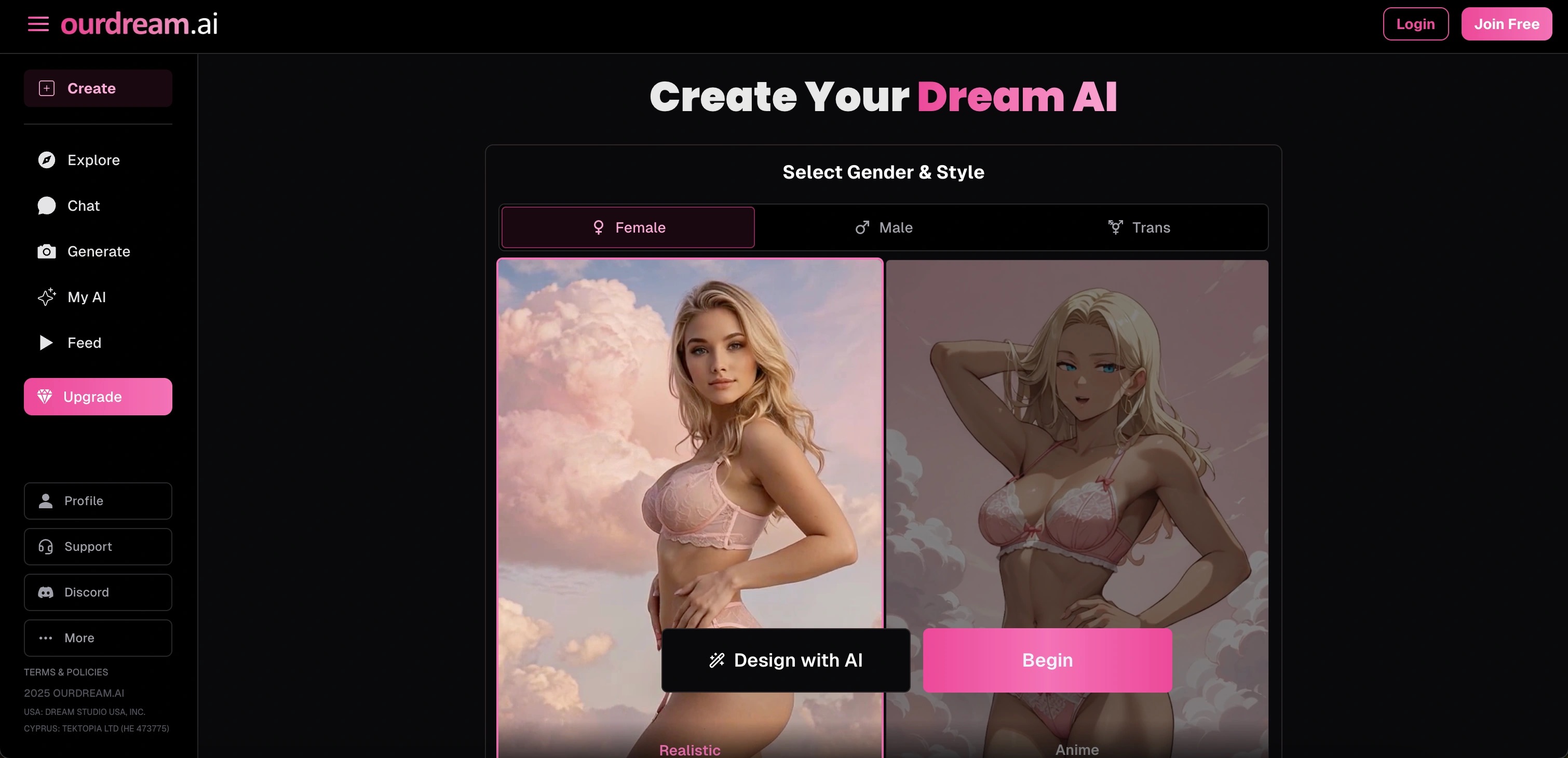
Rank 02 · Visual roleplay across devices
OurDream AI works for roleplay by combining custom companions with voice messages, photo-real images, and apps on web, iOS, and Android. That makes it practical for users who build a character once and revisit it throughout the day. The trade-off is that its strengths lean visual, so it is less convincing than memory-first apps when you want a character to hold detailed rules across longer arcs.
Editor's takePick OurDream AI when portability and character visuals matter more than airtight scene memory.
Pros
Cons
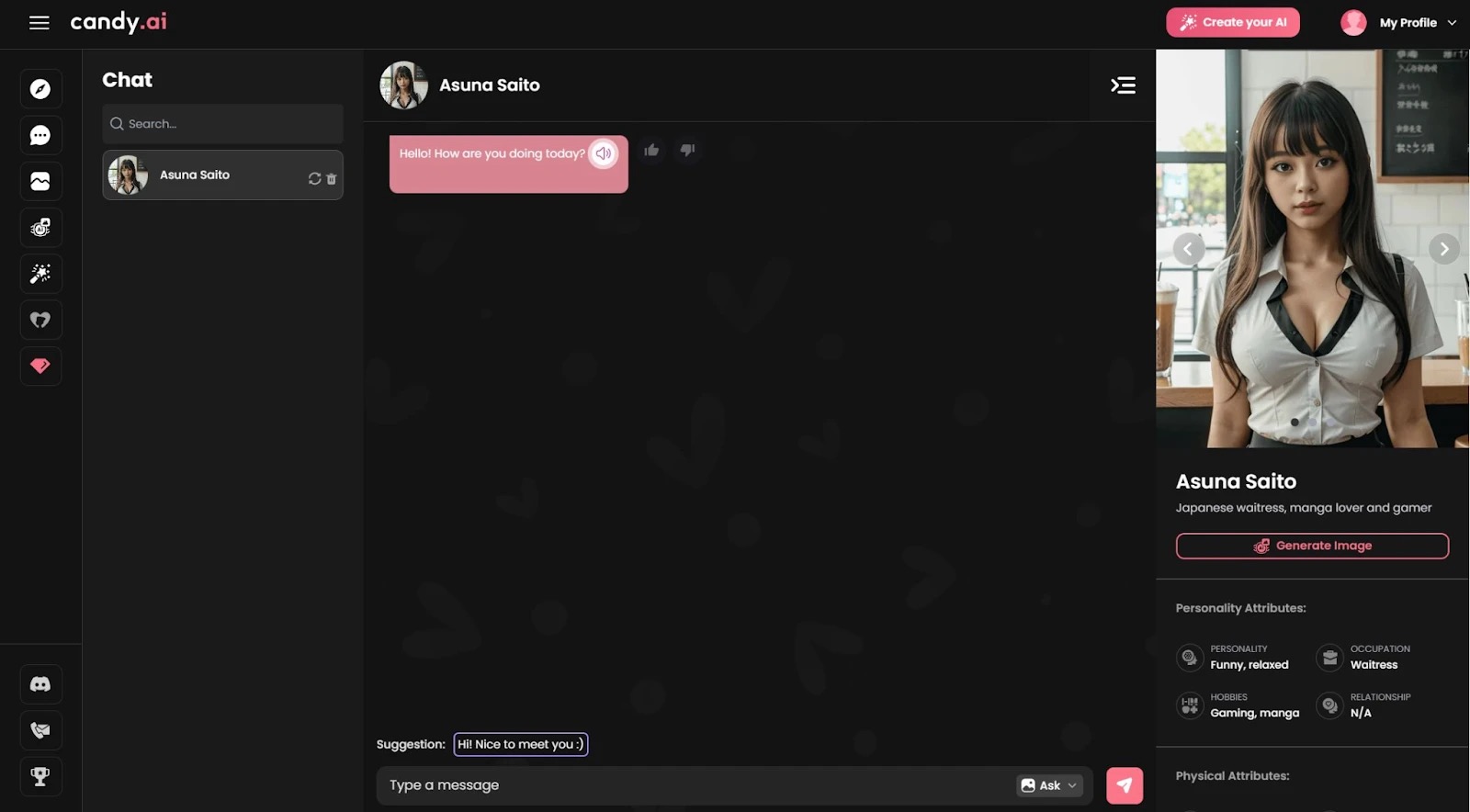
Rank 03 · Character arcs with memory
Candy AI is one of the better roleplay choices when you care about sustained character behavior, because long-term memory and multiple personality presets give the chatbot more structure than many free-first rivals. Voice messages and the custom avatar builder also help define tone. The clear downside is value: it starts at $12.99/mo and offers no free tier, so you pay before knowing whether its style matches yours.
Editor's takeCandy AI is a strong buy for memory-heavy roleplay, but the lack of a free trial makes the first payment harder to justify.
Pros
Cons
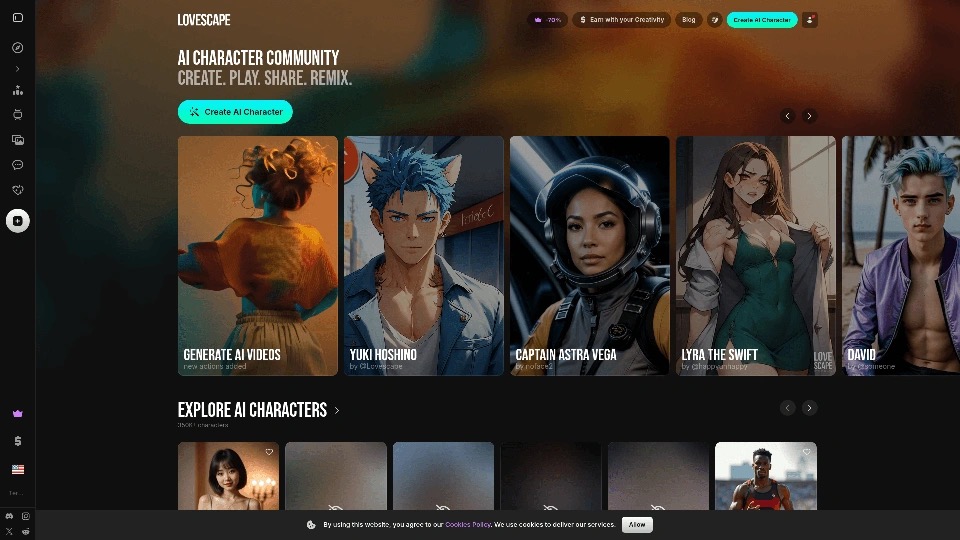
Rank 04 · Prompted scene starters
Lovescape earns its place by giving roleplay structure through romance scenarios, scene settings, and custom partners, which is useful if blank-page prompting slows you down. Voice replies can also make a preset scenario feel less mechanical. Its weakness is flexibility: guided setups are convenient, but they can feel narrower than apps centered on deeper memory or more open character rule-building.
Editor's takeLovescape is worth it if you want roleplay guidance, not a blank box that makes you script everything yourself.
Pros
Cons
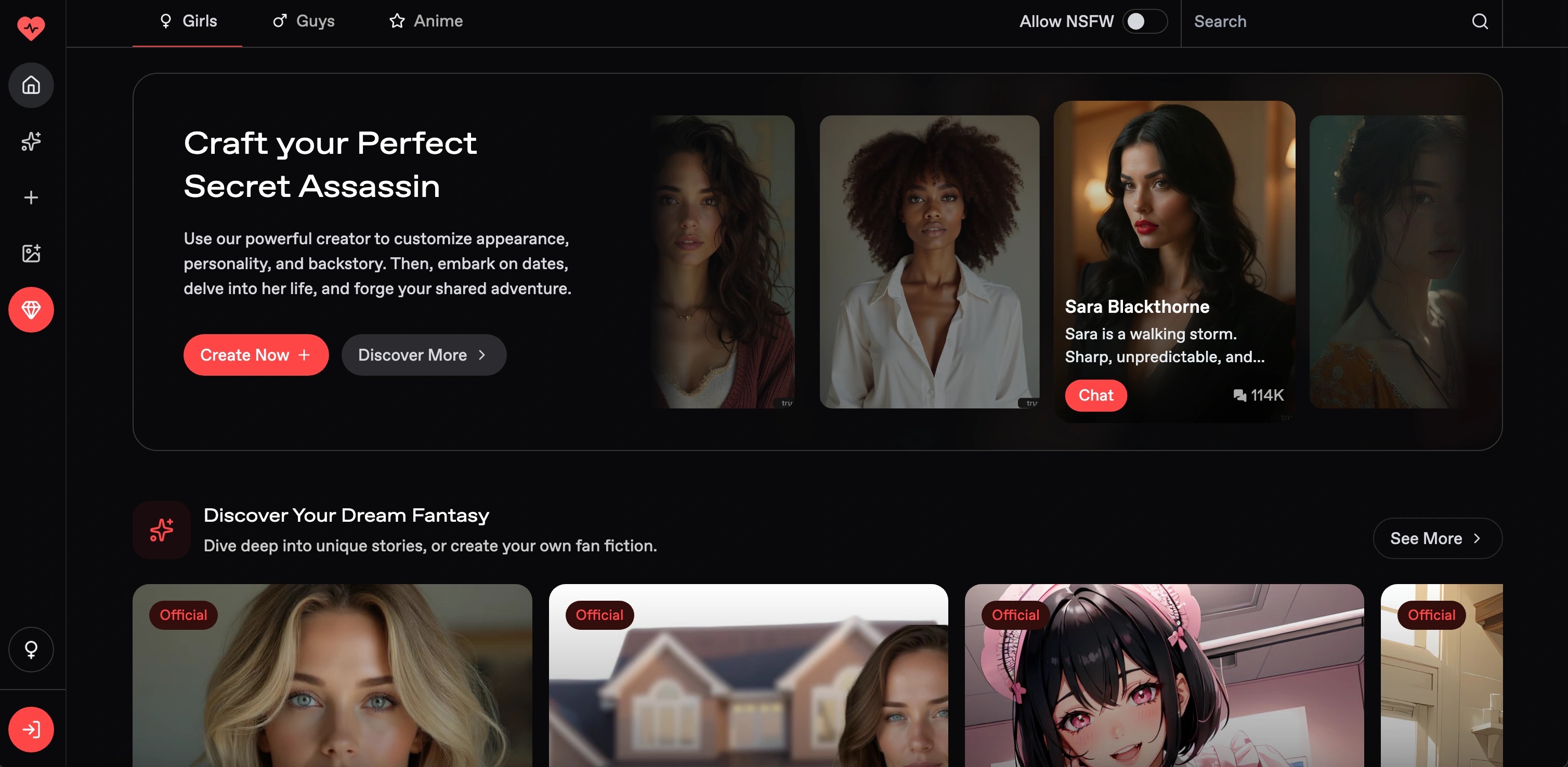
Rank 05 · Consistency across sessions
Nectar AI suits roleplay because long-term memory and custom creation give you a better shot at keeping a character coherent from one session to the next. Photo and voice features help reinforce that same persona instead of resetting the vibe each time. The trade-off is that it can lean more into realism and media consistency than into fast, playful scene setup, so it rewards users who are willing to shape the character carefully.
Editor's takeFor roleplay built on continuity rather than novelty, Nectar AI is one of the safer bets.
Pros
Cons

Rank 06 · Low-cost custom scenes
Golove AI performs well for roleplay because it combines roleplay scenarios, a custom AI lover, and uncensored chat without making setup feel heavy. At $9.99/mo with a free tier, it is easier to justify than pricier paid-first options. The main limit is depth: it is good at getting a scene moving, but less equipped for the kind of long-running continuity that memory-focused apps handle better.
Editor's takeGolove AI is the practical pick when you want roleplay quickly and cheaply, not a highly layered character simulator.
Pros
Cons
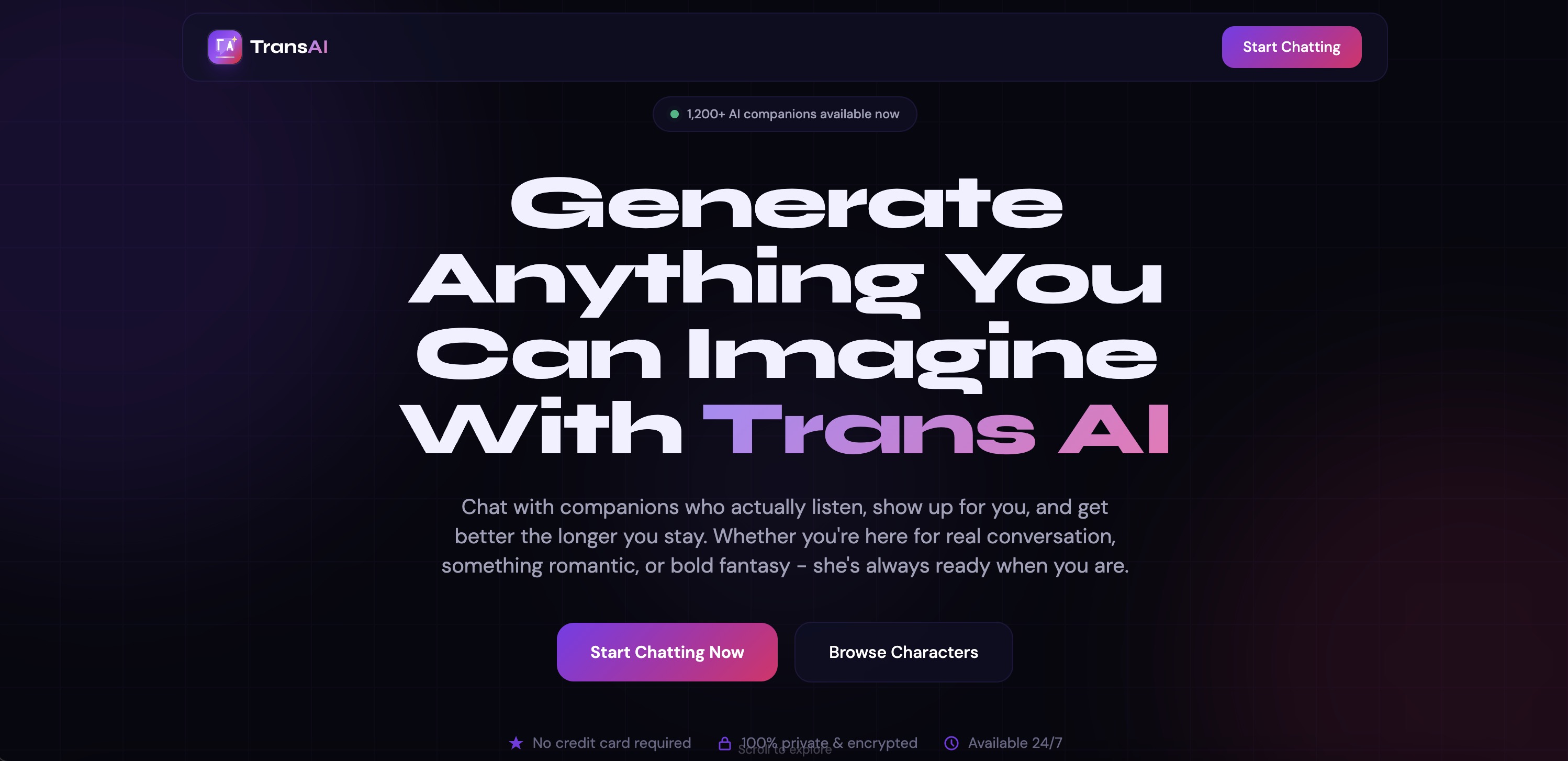
Rank 07 · Testing memory on a budget
AI Trans Chat makes sense for roleplay because it combines custom characters, memory, and uncensored chat in a free/freemium setup, which keeps the risk low while you test character fit. Its private and discreet angle also helps if you prefer roleplay apps that stay low-friction. The main compromise is presentation depth: it covers the essentials, but it lacks voice or richer media tools that can make scenes feel more textured.
Editor's takeAI Trans Chat is a sensible first stop if you want to test roleplay memory before spending real money.
Pros
Cons

Rank 08 · Private text-first roleplay
AI BDSM Chat ranks well for roleplay because custom characters, memory, and uncensored chat give you the key controls needed for text-led scenes. The free/freemium entry also makes it cheaper to experiment with boundaries and persona wording. Its weakness is breadth: for immersive use, the lack of voice or image-led role support leaves it feeling more like a straightforward chat engine than a fully staged experience.
Editor's takeChoose AI BDSM Chat if you want direct, private roleplay controls and do not need voice or visuals to carry the scene.
Pros
Cons

Rank 09 · Free character fit checks
Love Companion AI works for roleplay by offering custom characters, memory, and uncensored chat in a free/freemium model that removes most of the cost anxiety. That makes it useful for trying different persona prompts and seeing which ones hold up. Its limitation is that the feature set is fairly plain for this use, so users looking for stronger mood-setting tools may outgrow it fast.
Editor's takeLove Companion AI is a good low-stakes sandbox for roleplay ideas, even if it is not the most immersive app here.
Pros
Cons
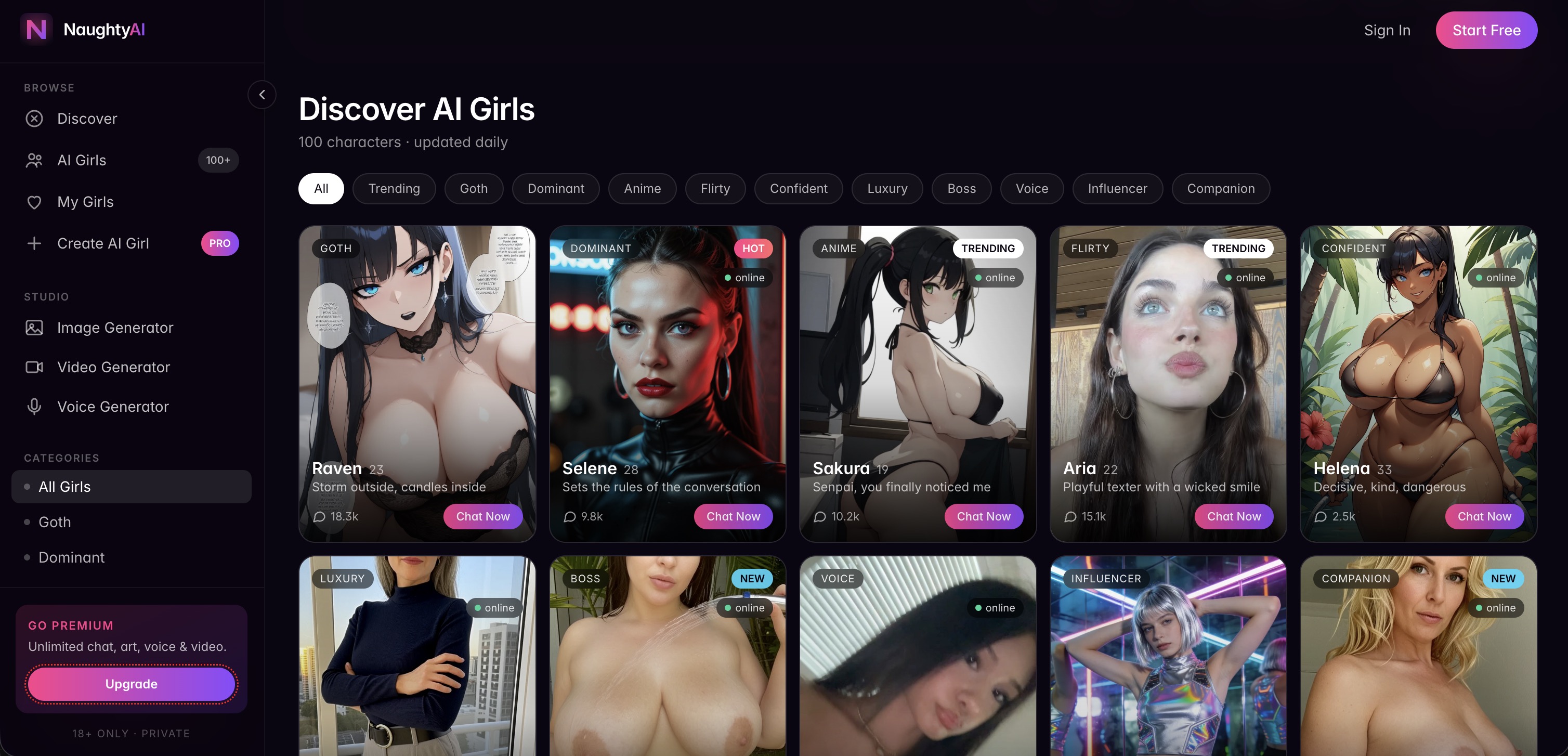
Rank 10 · Recurring personas on free access
Naughty AI is useful for roleplay because persistent memory, custom characters, and uncensored chat give recurring personas more stability than throwaway chat apps usually manage. The free/freemium model also helps you gauge that continuity before paying. Its drawback is that the experience remains mostly utilitarian, with fewer tone-shaping tools than voice-enabled or scenario-led alternatives.
Editor's takeNaughty AI is worth shortlisting if persistent recall matters more to you than polish or multimedia flair.
Pros
Cons


Rank 11 · Browser-based roleplay trials
NSFW KI fits roleplay use because it gives you custom characters, memory, and uncensored chat in a free/freemium web app, which is enough to test persona setup cheaply. That said, it appears stronger as a basic text roleplay option than as a richer character platform. If you want voice, images, or more scene scaffolding, other tools bring more to the table.
Editor's takeNSFW KI is fine for low-cost browser roleplay, but it is better as a simple tester than as a premium-feeling pick.
Pros
Cons
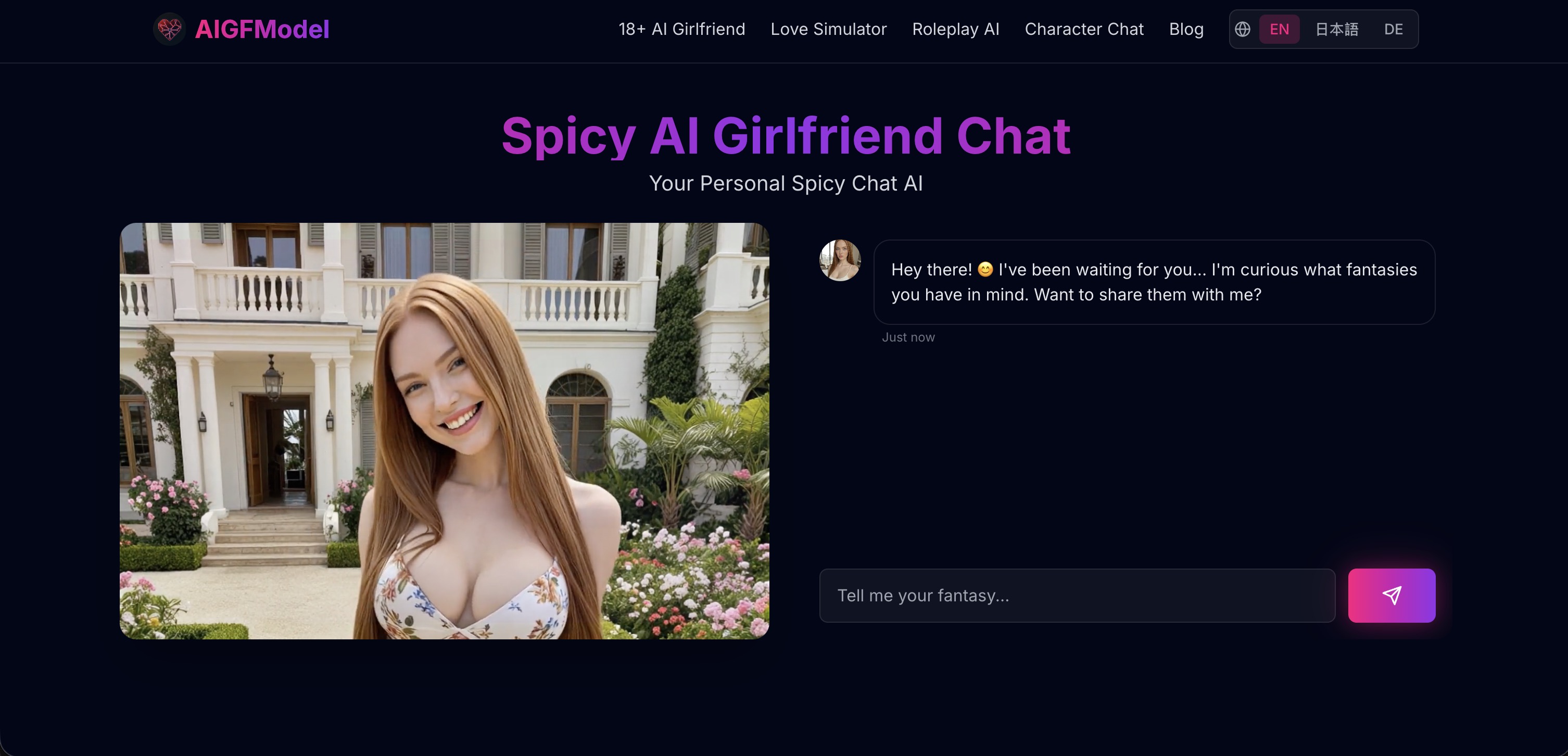

Rank 12 · Free memory-led setup
AIGFModel works for roleplay because persistent memory and custom characters support repeat interactions better than disposable chat apps do, and its free/freemium model keeps the barrier low. For this dynamic, that is valuable if you are testing whether a bot remembers relationship rules or persona details. The trade-off is that it still looks more functional than immersive, with no voice layer to deepen delivery.
Editor's takeAIGFModel is a sensible budget pick for memory-led roleplay, especially if you care more about recall than presentation.
Pros
Cons


Rank 13 · Stylized character scenarios
AIGfriend is more roleplay-specific than many general chat apps because it includes custom scenarios, character creation, and private roleplay rather than leaving all the framing to you. That makes it useful when you want a more stylized fictional setup. Its weakness is continuity: without a stated memory focus, it looks better for one-off scenes than for long-running character arcs.
Editor's takeAIGfriend is best for stylized, scenario-based roleplay rather than for deeply persistent character relationships.
Pros
Cons


Rank 14 · Free-first scene testing
Dream Girl AI is viable for roleplay because it covers the basics well: custom characters, memory, uncensored chat, and a free/freemium entry point. That combination lets you test whether a character concept has enough pull before paying. The downside is that it does not bring standout tools for immersion, so it can feel interchangeable once you move beyond simple text scenes.
Editor's takeDream Girl AI is a decent no-pressure starting point, but not the most distinctive roleplay app once your standards rise.
Pros
Cons
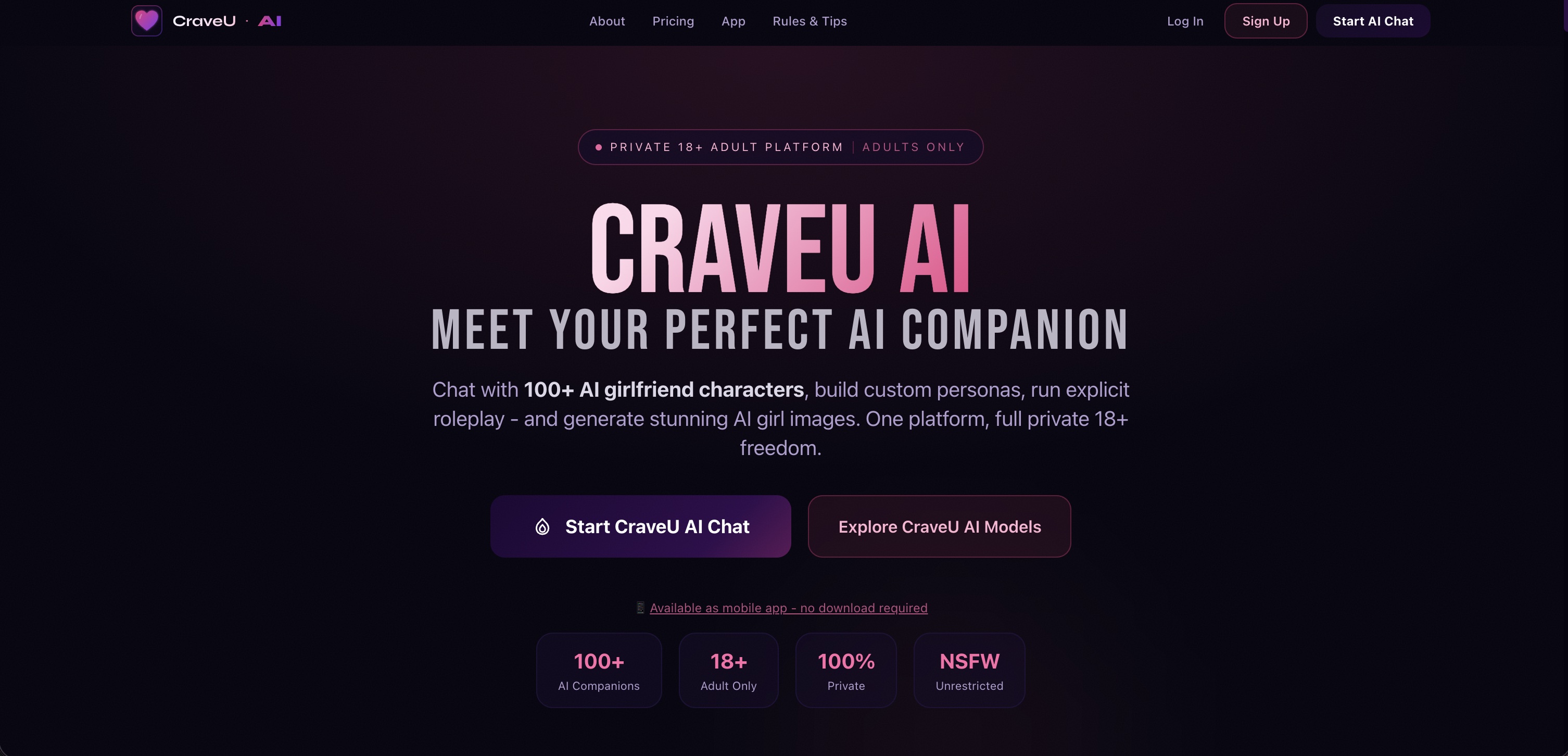

Rank 15 · Entry-level custom roleplay
CraveU AI is a serviceable roleplay pick because memory, custom characters, and uncensored chat give you the fundamentals needed for recurring text scenes. Its free/freemium access also keeps the value proposition simple if you are still comparing options. The limitation is that it does not add much beyond those fundamentals, so users wanting stronger personality framing may find it generic over time.
Editor's takeCraveU AI is fine for basic custom roleplay, but it is more practical than memorable.
Pros
Cons
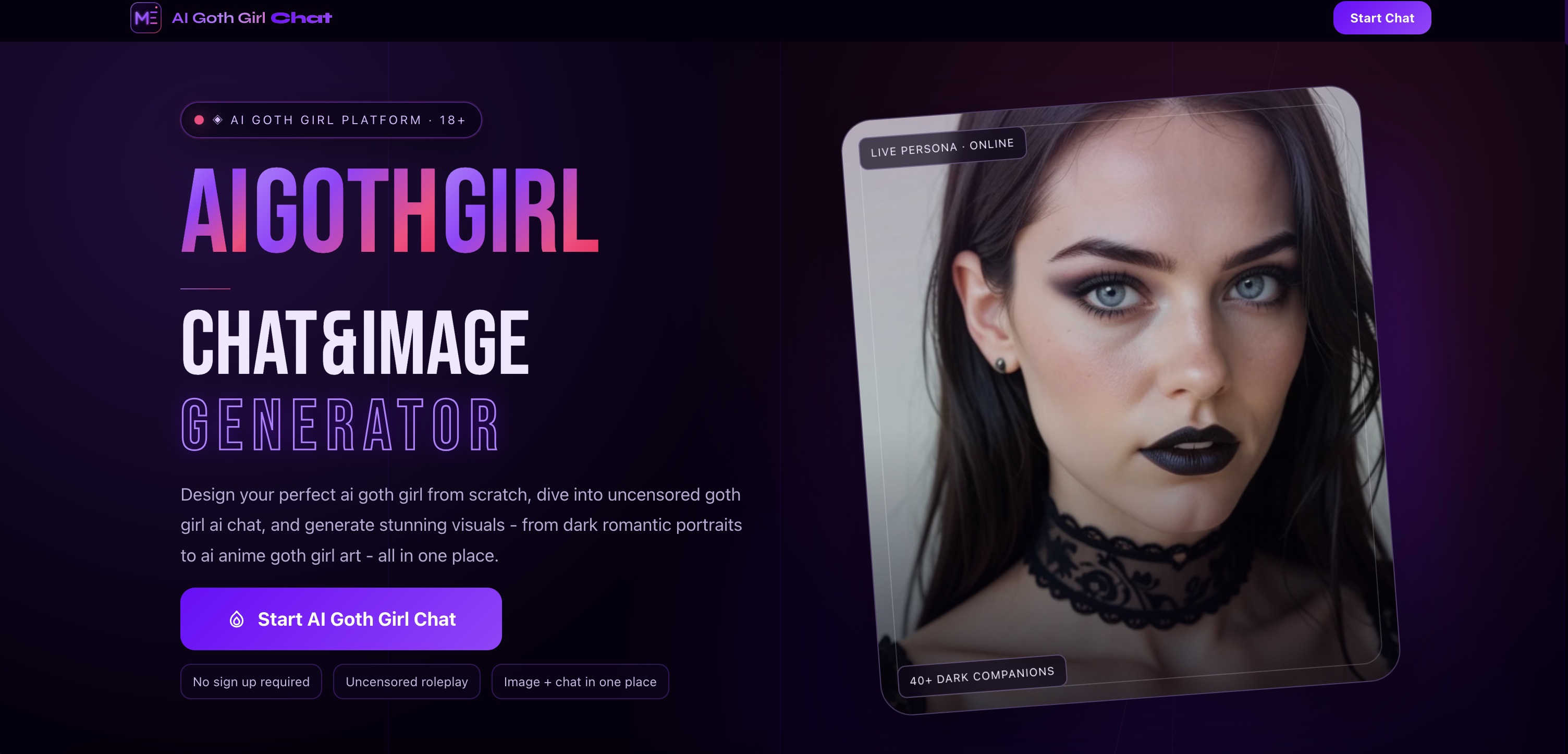

Rank 16 · Low-paywall persona testing
AI Goth Girl works for roleplay because it gives you custom characters, memory, and uncensored chat while keeping early access lighter than stricter paywalled tools. That is useful if you want to test tone and persona fit before spending. Its drawback is that the overall experience appears broad rather than specialized, so it may not satisfy users chasing deeper role structure.
Editor's takeAI Goth Girl is a fair value tester for roleplay, especially if you dislike paying before the chat proves itself.
Pros
Cons


Rank 17 · Repeat visits to one persona
My Naughty AI makes sense for roleplay because persistent memory and custom characters support returning to the same character without starting from zero each time. The free/freemium model also helps you find out whether that persistence is enough for your style before paying more. Its main weakness is immersion range, since it stays centered on text chat rather than offering extra delivery tools.
Editor's takeMy Naughty AI is stronger for repeat character check-ins than for cinematic, highly immersive roleplay.
Pros
Cons
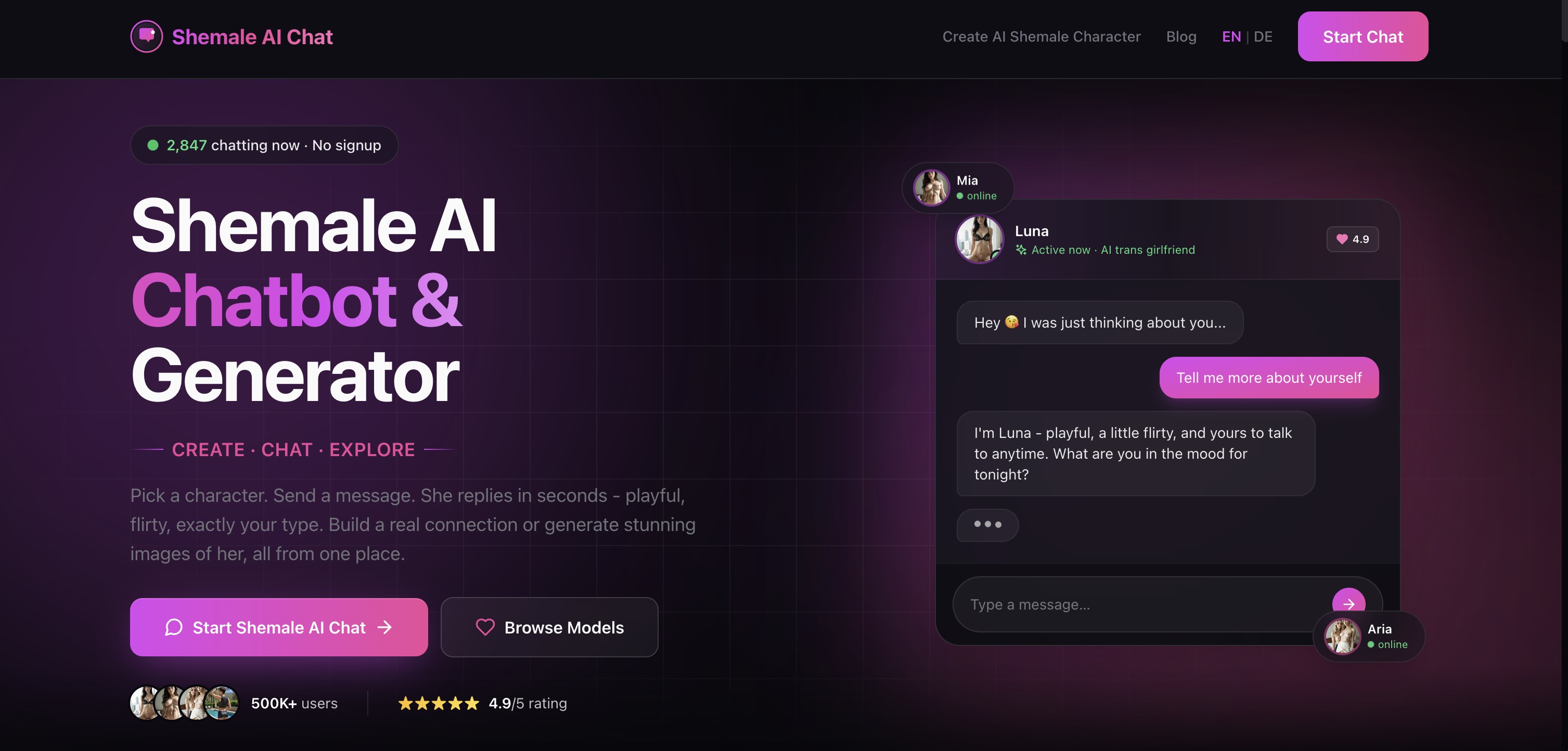

Rank 18 · Low-cost persona experiments
Shemale AI can work for roleplay because it offers custom characters, memory, and uncensored chat without forcing an immediate paid jump. That makes it a practical way to test whether a certain persona direction works for you. The downside is that its roleplay experience appears fairly barebones, so users wanting richer structure or stronger presentation may move on quickly.
Editor's takeShemale AI is useful for cheap persona testing, but it is not the most textured roleplay experience on the page.
Pros
Cons


Rank 19 · Detailed worldbuilding control
Caveduck is one of the more roleplay-specific options here because detailed character cards, world info controls, adjustable memory, and multiple models all serve users who want to shape the setting as much as the bot. That depth can be excellent value if you actually use it. The catch is complexity: it asks more from you up front and may feel slower than simpler apps built for instant scenes.
Editor's takeCaveduck is one of the better picks for serious roleplay tuning, but only if you want to configure the experience rather than just start chatting.
Pros
Cons

Rank 20 · Budget bot library access
Venus Chat AI is appealing for roleplay on price and variety: the community bot library, custom bot builder, persona presets, and memory options give you multiple ways to find or shape a character for $6.99/mo. That is good value if you like experimenting. The trade-off is consistency, since library-based experiences can feel uneven compared with more tightly designed companion tools.
Editor's takeVenus Chat AI is a good bargain for roleplay variety, but it is less dependable than the stronger top-ranked apps for consistent character performance.
Pros
Cons
Methodology
We tested these apps the way a real user would: creating adult fictional personas, starting fresh scenarios, editing prompts, and checking whether the character could hold a role across a longer back-and-forth without collapsing into bland assistant language. We also looked at where settings lived, how easy it was to reset or refine a character, and how much of the experience was visible before payment.
We re-check this category on an ongoing basis, with the last full re-test completed in November 2026. For roleplay-focused bots, small product changes matter, so we pay close attention to memory behavior, boundary handling, filter shifts, and whether the free experience still reflects the paid product honestly.
We checked whether the character stayed in role, held onto the scenario, and responded like a persona rather than a generic chatbot. A strong app can recover from interruptions without dropping the premise.
We set plain-text limits and stop cues to see whether the bot acknowledged them, de-escalated, and adjusted tone. In this category, respecting a limit is as important as creative improvisation.
We looked at how much you can define up front: persona, relationship dynamic, speaking style, backstory, and rules. Better tools make setup clear without hiding the useful fields behind trial and error.
We checked whether the app remembered names, preferences, scenario facts, and prior boundaries across later chats. Short-term coherence is common; usable continuity is rarer.
We scored how much you can actually test for free, what the paid layer seems to unlock, and whether the upgrade pitch matches the real limits. A flashy preview with no meaningful trial scored poorly.
We reviewed sign-up friction, deletion options, billing clarity, and whether the app gave obvious ways to manage history or persona data. For adult companion apps, these controls matter early, not later.
Our scores are editorial and re-checked over time; policies and limits can change, so verify each app’s current terms before you pay.
Buyer's guide
7 topics5 min read
Searchers use this term loosely, but it is not the same as every adult chatbot. In practice, AI Companion Roleplay usually means a character-centered chat where the persona, scenario, and boundaries matter more than general flirting, image generation, or broad assistant features.
If you mainly want open-ended adult conversation, Adult AI Companion Chat is the closer match. If you care more about the bot format than the roleplay structure, see Adult AI Chatbots. If images are the main event, Adult AI Generators is the better fit. And if you are comparing broader mobile-first products, start with AI Companion Apps.
| Term | What it usually means in these apps | Typical persona | Best for |
|---|---|---|---|
| AI Companion Roleplay | Character-led chats built around a premise, rules, and continuity | A defined fictional partner or scenario lead | Adults who want consistency and a stronger sense of role |
| Adult companion chat | Ongoing one-to-one adult conversation with lighter structure | A companion persona with flexible topics | Casual chatting with some intimacy but less setup |
| Adult chatbots | Bot-first experiences with varying themes and controls | Anything from preset characters to generic bots | Comparing interfaces, filters, and chat quality |
| Adult generators | Image-first tools, sometimes paired with chat | A visual character concept | People who care more about images than long sessions |
| Companion apps | Broader product bucket across web and mobile | Relationship-style or virtual partner personas | Users shopping across formats, not just roleplay |
The better these apps are at setup, the less you have to fight them mid-conversation. In our testing, the useful split was between products with fixed preset characters and products that let you define a custom persona, tone rules, and memory anchors before the chat starts.
That matters for value, too. A free tier can look generous until you realize it only exposes preset personas while the custom builder, memory controls, or prompt editing sit behind payment. For this category, we treat character creation tools as core functionality, not a bonus feature.
JOI AI, OurDream AI, Candy AI, and Nectar AI all matter here because this kind of app is often judged on the first two minutes of setup. If the builder is vague, scattered, or buried, long-session coherence usually suffers later.
People usually want one of two things from this category. The first is talking to a character who leads the role and keeps the world intact. The second is using the bot as a flexible partner while you steer the premise yourself. The same app can support both, but not equally well.
If you want the character to lead, prioritize strong persona anchoring, memory, and a prompt field that accepts clear scenario instructions. If you prefer steering, look for the adult AI chatbots we tested for memory and response speed with fast response editing, easy tone resets, and a bot that does not over-police harmless context changes. General-purpose chatbots often fail here because they flatten the persona and over-explain instead of playing the role.
Free access can still be useful, but in this category it often works as a teaser rather than a full trial. The common pattern is simple: you can browse characters, start a chat, and test the writing style, but memory depth, voice, image extras, longer sessions, or custom personas sit behind payment.
That does not automatically make a product bad value. What matters is whether the unpaid version tells you enough about role stability before asking for money. We rate free tiers higher when you can meaningfully test persona consistency, prompt control, and basic boundary handling without subscribing.
If a free tier only showcases polished opening lines, we would treat it cautiously. For roleplay bots, the failure point usually arrives later, when the app has to remember your setup and stay coherent rather than charm you in the first exchange.
Text quality still decides most outcomes, but voice and images can matter if they support the role instead of distracting from it. Voice helps when pacing and presence matter to you, while image features help with character visualization. Neither fixes weak memory or unstable persona writing.
We score these extras as support features, not the main event. A polished voice layer is nice; a bot that forgets your limits on the next session is not. The strongest products in this category use added features to reinforce a character you already understand, not to hide a thin chat core.
Before paying, make sure the app proves the basics you actually came for. In AI Companion Roleplay, that means coherent character behavior, usable setup tools, and a free experience that does more than stage a glossy demo.
We would also check billing presentation and deletion controls early. Adults comparing these apps often focus on character quality first, then realize later that privacy controls or account cleanup are harder to find than they should be.
The category has become more configurable. More apps now combine preset characters with builder tools, letting you start from a template and then tune personality, tone, and backstory instead of accepting a fixed persona.
We also saw a sharper split between products that support longer continuity and products that still optimize for short, attention-grabbing chats. Another noticeable shift is that boundary handling is easier to test than it used to be, because more apps expose editable persona or memory fields where you can place limits and tone instructions directly.
At the same time, paywalls have become more layered. Instead of one simple upgrade gate, some apps now divide access across memory, voice, images, or custom creation. That makes plain value-for-money testing more important than ever.
Consent & safety
In this category, a safeword or limit is usually just a plain-text instruction you give the character. What separates a stronger app from a weaker one is not fancy branding around safety. It is whether the bot clearly acknowledges the instruction, steps out of escalation when asked, and keeps that rule in mind later instead of treating it like disposable context.
If the app offers a persona, memory, profile, or character field, store your limits there as well as in the opening prompt. That gives the bot more than one chance to retain the rule. For adults using roleplay chat regularly, this is one of the simplest ways to improve consistency.
Aftercare in an AI context is the wind-down: ending the role clearly, checking your own comfort level, and using a short out-of-character close if that helps you reset. If a session stops feeling right, pause, restate the boundary, or leave the chat. Consent and wellbeing still matter even when the other side is fictional.
Setup template
Place this in the app’s persona, memory, or character setup field when available, and re-check it after major app updates or model changes.
Privacy checklist
Before you subscribe to any adult companion platform, verify the basics yourself. These checks matter as much as writing quality.
Nickname sign-up
See whether you can register with a nickname and an alias email rather than tying the account to your primary identity.
Chat deletion
Look for a visible way to remove individual conversations and a separate option to delete the full account.
Training disclosure
Read the privacy policy for whether chats may be used to improve models or moderation systems, and whether any opt-outs are offered.
Billing descriptor
Check how the merchant name appears on a bank or card statement before you pay, especially if discretion matters to you.
Age gate
Confirm the service is clearly restricted to adults 18+ and note any age-verification steps before purchase.
App versus web history
If the product runs on both app and web, check whether chat history syncs across both and where old sessions remain visible.
Memory controls
Review whether persona fields, saved memories, or character cards can be edited or cleared without starting over completely.
AI Companion Roleplay is a type of adult chatbot experience built around a consistent fictional persona, scenario, or relationship dynamic. The goal is not just conversation, but staying in character over time. The stronger apps let you define tone, backstory, and limits, then keep those details stable across a longer session instead of slipping into generic assistant replies.
The best choice depends on what you value most, but we give the edge to apps that combine strong persona depth with usable setup controls and a free tier that reveals enough before payment. On this page, JOI AI stands out when you want a more convincing role-driven experience, but it still needs to justify its paid layer against how much you can test first.
Yes, but free access is usually best for screening style rather than replacing a full subscription. A worthwhile free tier should let you test whether the character stays in role, whether setup fields are useful, and whether the bot respects your prompt. If the unpaid version only gives polished opening messages, we would not treat that as real proof of quality.
It can be reasonably safe if you treat privacy checks as part of the buying decision, not an afterthought. Use an alias email where allowed, read the policy on chat use and deletion, and verify how billing appears on a statement. For the roleplay itself, safety is mostly about whether the bot responds appropriately to plain-text limits, stop cues, and requests to step out of character.
Sometimes, but not reliably enough to assume it. The better apps let you place limits in a persona, memory, or character field so the rule has a better chance of carrying over. Even then, we recommend repeating important boundaries at the start of a new session, because memory behavior can change after updates or differ across chat modes.
Some adult chatbots feel less restrictive than filtered mainstream character apps, but fewer filters never means no rules at all. Most services still block certain requests, enforce age boundaries, or interrupt unsafe framing. What matters is whether the app can maintain adult fictional roleplay without constant derailment, while still respecting stated limits and the service’s own terms.
Some products in this space are available as apps, while others work mainly through the web. Because availability changes, we recommend checking each product page directly before you commit, especially if mobile use matters to you. If you are comparing the broader mobile-first side of this market, AI Companion Apps is the more useful companion guide.
Beginners usually do best with an app that balances preset characters with light customization. That gives you a fast start without trapping you in a rigid persona. We would look for clear prompt fields, easy scenario resets, and a free tier that lets you test role consistency before paying. Candy AI and OurDream AI are the kind of names we would inspect closely for that balance.
Roleplay is more structured. It usually centers on a defined character, a premise, and some continuity rules, while adult companion chat is often looser and more conversational. If you want a bot to stay in a specific role, this page is the better fit. If you mainly want flexible one-to-one conversation, see Adult AI Companion Chat.
They matter when they support the character, not when they distract from weak text quality. Voice can add presence and pacing, while images can help define a fictional persona visually. But neither feature compensates for poor memory, unstable boundaries, or a character that breaks role after a few turns. We would always judge the text experience first, then the extras.
Next step
We signed up for and tested all 20 platforms in this category — start with our top pick or browse every review.
This directory is for adults 18+. Scores reflect our own hands-on testing and editorial opinion. Disclaimer.